I tried 5 things to fix my sleep. None of them did. Here's what finally worked.





By the time I gave up trying to sleep on my own, my bedside table looked like a pharmacy. Four bottles. A sleep ring on the charger. A pair of $90 silk pajamas folded on the chair because cotton was supposedly making me hot. Behind them, on the dresser, a $400 set of cooling sheets, still in the box because they hadn't worked the week I tested them.
That's the paradox no one warns you about. Wired and tired at the same time. The engine that won't turn off when the rest of you is begging it to.
I tried five things to fix this, roughly in the order most people try them. Four sold me the feeling of doing something without actually changing anything. The fifth was supposed to be the answer. It wasn't. The sixth was. This is what I learned.
1.Melatonin, magnesium, and the rest of the supplement aisle

I started where most people start. A bottle of 5mg melatonin. Then magnesium glycinate. Then sleep stacks with valerian and L-theanine and ashwagandha. The first night I took melatonin I slept hard for six hours, then woke at 3am and couldn't get back down. The pattern repeated all week. I fell asleep faster, sure. I also woke up feeling more drugged than rested.
I read later that 5mg is roughly fifty times the dose your body actually makes. Your receptors burn out. The next morning feels like a hangover. My ring data confirmed it: deep sleep was barely improving. REM was getting worse.
Falling asleep fast isn't the same as sleeping well.
2.Cooling sheets and "breathable" bedding

Next I went down the bedding rabbit hole. Bamboo sheets, eucalyptus pajamas, performance fabrics, a $400 set that promised to keep me "four degrees cooler." They felt nicer than my old cotton. By 2am I was still kicking off the duvet, drenched, and my partner had taken all the blankets again.
The problem was never the sheets. The problem was that my body actually needed cooling, not less insulation. Surface temperature is not the same as core temperature. Sheets can wick. They can't drop your internal thermostat by half a degree at 2:47am, which is what your sleep cycle actually needs them to do.
Surface temperature isn't the same as core temperature.
3.A $300 sleep tracker that told me I was tired

I wore a sleep ring for four months. Beautiful, well-made, and gave me a daily score from zero to one hundred. It also gave me four months of data confirming what I already knew. Every morning I'd open the app and read "Pay attention to recovery today." I would think yes, I noticed. I'm exhausted. The blue circle could not have made it clearer.
It measured the problem in extraordinary detail. It just couldn't fix it. It told me I'd had 32 minutes of deep sleep when I needed 90. It didn't tell me why, and it certainly didn't do anything about it.
A diagnostic without an intervention is just a diary.
4.Blackout shades and a $90 silk sleep mask
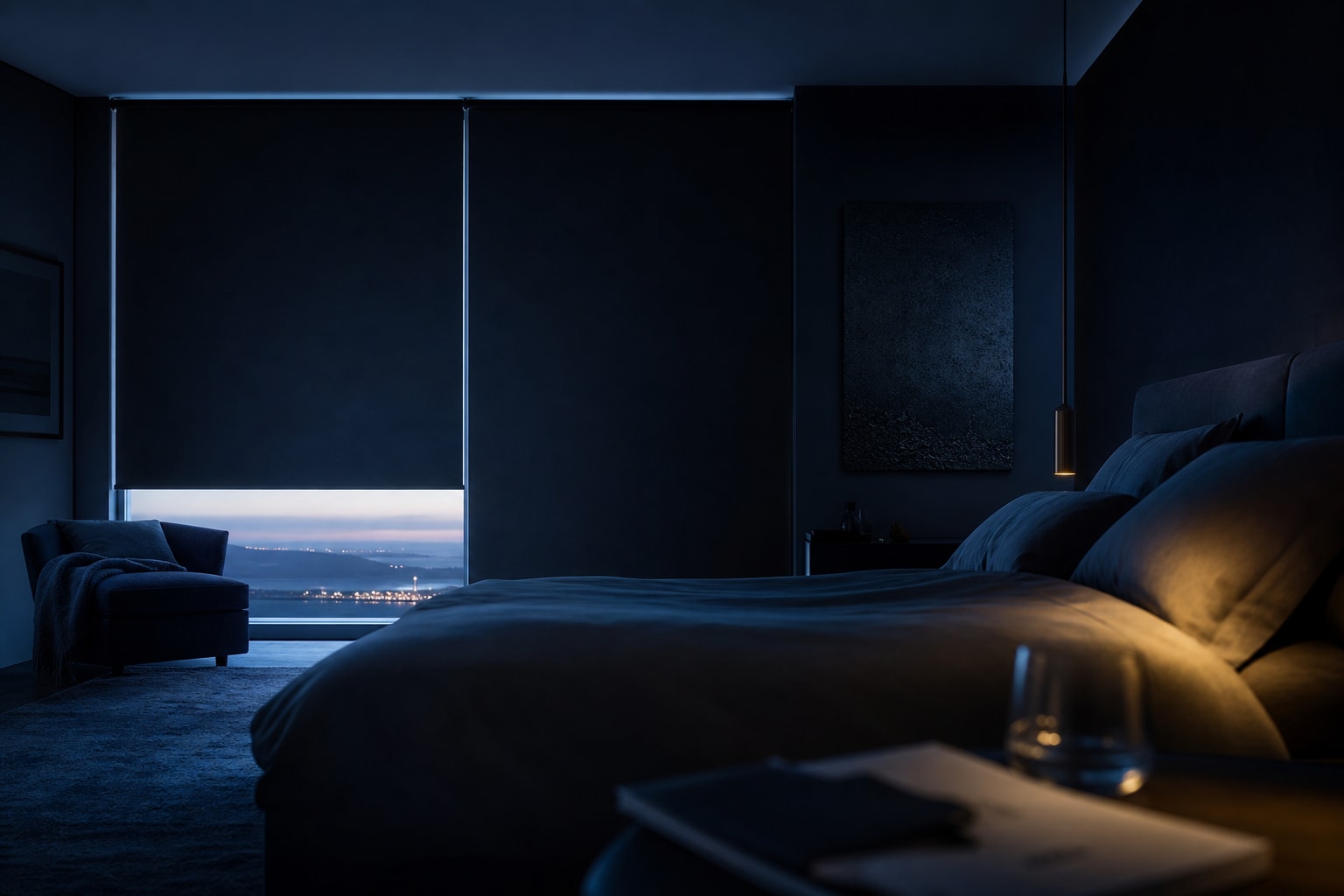
A sleep coach told me light was the issue. So I spent real money on motorized blackout shades. I bought a silk-lined sleep mask. The room got darker than a movie theater. I fell asleep maybe ten minutes faster.
The 3am wake-ups didn't stop. I started to suspect that the variables you can see, light, sound, mattress firmness, are the easy ones to control, and the harder ones, your actual physiology, are the ones that actually matter.
The visible variables are rarely the load-bearing ones.
5.The famous $3,000 cooling mattress pad

Then I caved and bought the cooling pad everyone was talking about. Hub. Hose. App. Two zones. I set my side to 60°F. The first week was honestly impressive. The bed felt like a hotel.
Then it wasn't. The system was generic. It cooled when I asked it to, not when my core temperature was actually rising, which was rarely the same time. Within a month I was tweaking it nightly and still waking up too hot or too cold. I read later that owners were measuring the pad running 10 to 15 degrees above its own setpoint. The "AI" was reporting my partner and me as having identical sleep stages, on identical nights, with identical recommendations, which we obviously weren't having. Last October the cloud went down for nine hours and the bed locked itself in an inclined position with the heater on, and I read posts from owners titled "I am sleeping in a sauna."
The hub sounded like a computer tower fan. The hose bumped the headboard. The subscription renewal showed up at twelve months asking for another two hundred dollars to keep the features I'd already paid three thousand for.
I returned it.
A cooling system that doesn't know you is just an expensive AC.
By night three I'd stopped checking my phone at 3am. The system was already adjusting before I could feel it. I just slept through it.
Daphne, OrionSleep owner, Kansas City MO6.The only system that actually adapted to me: OrionSleep

OrionSleep was the only one I tried that wasn't sold the same way to everyone.
The full system is a smart bed cover that runs dual-zone temperature from 50 to 115 degrees, adjusts in real time as your night progresses, and learns your specific physiology over weeks. No hub on the nightstand. No hose behind the headboard. No subscription. No paywalled features. The features you pay for, you own.
What surprised me was what happens before the bed ships. The way OrionSleep gets the personalization right from night one is a one-night at-home sleep test, an optional sensor patch you wear before the system arrives. Mine showed my temperature drop was running about forty minutes late, with a micro-arousal cluster in the small hours of the morning almost every night I tested. The system came pre-programmed to that pattern.
By the third night I slept seven hours straight. By week two my recovery score on the old ring went from 67 to 84. Same body. Same room. Different system.
The reason every other thing I tried had failed was simple in hindsight. None of them had ever started by knowing me.
The fix wasn't a better thing. It was a system that adapted to me.
Two-year warranty · 30-night sleep trial · Free US shipping
What actually changed

The OrionSleep system
built around you
- Adapts in real time to your specific physiology, all night
- No hub on the nightstand, no hose behind the headboard
- Two truly independent zones, your side and theirs
- No subscription, ever. The features you pay for, you own
- Local control, works even when the internet doesn't

A generic cooling pad
Same program for everyone
- App guesses at your temperature curve
- Hub on the nightstand, hose behind the headboard
- Same Autopilot script for everyone
- Subscription required to keep the features
- Stops working when the cloud does
"By night three I slept seven hours straight. By week two my recovery score went from 67 to 84. Same body. Same room. Different system."From the test
What real Orion sleepers are saying
Perfect temperature for both of us
I run like a radiator and my wife sleeps colder. We decided to stop fighting over the AC temp and tried Orion. The first night was the first time either of us felt like the temperature was perfect for both of us. So happy.
Probably the best night's sleep I've had all year
Got my Orion set up at 12am after my cross-country flight was delayed for hours. I then had probably the best night's sleep I've had all year. I track my metrics fairly consistently with Oura, and somehow, despite travel, got 1.5 hours of both REM and Deep Sleep, which has not happened in years. I'm a very hot sleeper, and Orion is the only smart mattress cover that's been able to actually keep me cool.
I look forward to crawling into bed
I have been enjoying the Orion. Honestly, I look forward to crawling into bed. I have not had any significant night sweats, which is so wonderful to report. I love how quiet it is. The "away" function is nice. Overall, I am very happy.
Recovery is shockingly higher
I haven't changed a single habit outside of using the Orion since it arrived. Recovery has been shockingly higher.
The fix wasn't a better thing. It was a system that adapted to me.
The popular sleep advice is shaped like a list of products to try. Better sheets. Better tracker. Better mattress. What none of those things share is any awareness of your specific physiology, the way your body cools, the moment it wakes, the pattern that repeats night after night.
Most cooling pads sell you a temperature setting. A diagnostic ring sells you a score. The Orion system runs a model of your specific physiology in real time, all night, and gets it right from night one. By the time the system arrives, it isn't guessing.
If your sleep has been quietly running your life into the ground, this is the one I'd actually recommend.
Want your own sleep map first?
Take the one-night Sleep Disruption Test
A clinical-grade temperature monitor, worn for one night. Next-day results, reviewed with your personal sleep advisor. The same data we use to pre-program the system, so your Orion ships already tuned to you.
Common questions
Do I have to take the sleep test?
No. The full system can be ordered directly. The test is optional but recommended, because it pre-programs the system to your specific disruption pattern from night one. Without it, the system still works, it just spends the first weeks learning instead of arriving tuned.
Will it actually be cold enough during a hot flash?
The system runs to 50°F. That's five degrees colder than the famous cooling pad's floor. The full range is 50 to 115 degrees so the same bed handles both ends, including the cold-then-hot pattern that perimenopausal sleep tends to swing through.
What if my partner and I want different temperatures?
The two zones are independently controlled, not adjacent. Your side can run at 58°F while their side runs at 75°F, all night, without bleed between them. Each side runs its own program based on its own sleep test.
Is there a subscription?
No. The system is yours after purchase. Software updates are included for the life of the device. There is an optional Orion Intelligence add-on for deeper analytics ($21/month or $250/year) but the core temperature, sleep tracking, and pre-programmed personalization features are not paywalled.
Does it need internet to work?
No. The system has local control for all temperature functions, so a cloud outage won't lock your bed in an inclined position with the heater on, which is the situation that prompted us to test the category in the first place.
How is this different from a cooling mattress pad?
A cooling pad applies a temperature you set. The OrionSleep system models your specific physiology, then adjusts in real time as your night progresses. The sleep test is what lets it start tuned to you instead of guessing. The bed is the delivery system. The test is the differentiator.
What's the warranty?
Two years on the full system, with a 30-night sleep trial. If it isn't right, send it back. The system is also HSA/FSA eligible through Truemed if your provider issues a Letter of Medical Necessity.
The full system
Sleep built around your biology
The OrionSleep system starts at $2,395, or $64 a month. Dual-zone temperature from 50 to 115 degrees, real-time adjustment all night, no subscription, no paywalled features waiting at year one. The optional sleep test is $35 if you'd like the system pre-programmed before it ships.
Build my sleep system →Two-year warranty · 30-night sleep trial · Free US shipping · HSA/FSA eligible