6 things I found out about grocery store produce after growing my own for 90 days.

I bought the Farmstand because I was tired. Tired of dragging $200 of produce home from the Whole Foods on 3rd every weekend and watching half of it die in my fridge. Tired of buying organic baby spinach and finding it slimy by Wednesday. Tired of paying $4 for a bunch of basil that browned before I used a third of it.
Ninety days in, the spinach thing isn't even the most interesting part. The most interesting part is what I started reading about while waiting for my first crop to come in.
Some of it I had to read three times before I believed it. Apples sold in American grocery stores can be a year old by the time they reach the shelf. Bagged lettuce can already be two weeks dead when you put it in your cart. And 35% of conventional produce carries pesticide residues that nobody's particularly eager to talk about. Once you read this stuff, you can't un-read it. So I'm going to share it the way I learned it.
1.Your bagged spinach started dying the second it was cut

Most leafy greens lose between 30% and 90% of their vitamin C within 24 hours of being harvested. That's not a wellness-blog stat. That's peer-reviewed food science, published in Postharvest Biology and Technology, on actual spinach kept at refrigeration temperatures.
Here's the part that broke my brain: the bag of organic spinach I buy was already two weeks old when I picked it up.
It was harvested. Bagged. Trucked. Stored. Shelved. Then I added another four days in my fridge before I got around to using it. By the time it hit my salad bowl, the nutritional content I thought I was paying for was mostly gone. The cell walls had collapsed. The flavour had flattened. The colour had dulled in a way I'd always assumed was just "how spinach looks."
The salad I'd been eating for years wasn't really a salad. It was a memory of a salad.
90-day money-back guarantee · Free US shipping · No subscription
2.The average grocery store apple has been in storage for 9-12 months

I want to be clear about this one because I refused to believe it the first time I read it. (I had to read it three times.)
Apples sold in American grocery stores can be stored for up to a year in low-oxygen warehouses before they're shipped to retail. The technique is called controlled-atmosphere storage. Oxygen is dropped to 1-2%, the apple's metabolism slows almost to nothing, and it sits there. For months. Sometimes most of a year.
The tomato I bought last weekend? Probably six weeks old. The carrots that "looked fresh"? Anywhere from one to nine months in storage depending on the variety. Even the packaged lettuces, the ones with the springwater-bright illustrations on the bag, can be up to two weeks old by the time they hit the shelf.
Two weeks. Two weeks of bagged spinach already on the clock before it ever entered your kitchen.
Nobody at the store is lying to you. None of this is hidden. It's just that nobody's incentivised to tell you, either.
90-day money-back guarantee · Free US shipping · No subscription
3.Your produce traveled further than you did on vacation last year

The average piece of produce in an American grocery store has travelled 1,500 miles to get there. The number comes from a USDA-cited study on the Chicago wholesale market: 1,518 miles, on average, from farm to plate.
A separate analysis of the Jessup, Maryland terminal market pushed that number to 1,685. And the U.S. imports 61% of its fresh fruit and 35% of its vegetables, which means a meaningful portion of the produce sitting in your cart this weekend was on a plane or a container ship within the last month.
I'm not against trucks. I'm not anti-imports. But the moment I understood that "fresh" in a grocery context just means "still legally edible after a long journey," something inside me reorganised. The basil on my counter, growing under a light, four feet from where I was reading this, was three minutes from harvest. The basil at Whole Foods was four states away from being alive.
Fresh is supposed to mean something. At the grocery store, mostly it just means "not yet expired."
Once you taste produce that was alive an hour ago, the version at the store stops registering as food. It registers as a placeholder.From the test, day 22
90-day money-back guarantee · Free US shipping · No subscription
4.The $1,500-a-year math nobody runs on themselves

The USDA estimates the average American family of four throws away $1,500 worth of food every year. Feeding America puts the produce-specific number at closer to $1,600.
That number stopped me cold. I'd never sat down and added it up. The half-bag of arugula I composted on Sunday. The cilantro I bought for one taco and never touched again. The strawberries that looked perfect at the store and tasted like nothing. The lettuce that went from crisp to translucent in 48 hours.
I kept treating those losses as small. They are, individually. But after one slow afternoon with a calculator and a year of grocery receipts I'd never thrown out, I'd been spending roughly the cost of an 18-plant Farmstand every year, going straight from my refrigerator to my compost bin.
The math worked even before I factored in nutrition.
90-day money-back guarantee · Free US shipping · No subscription
5.About 35% of conventional produce carries "forever chemical" pesticides
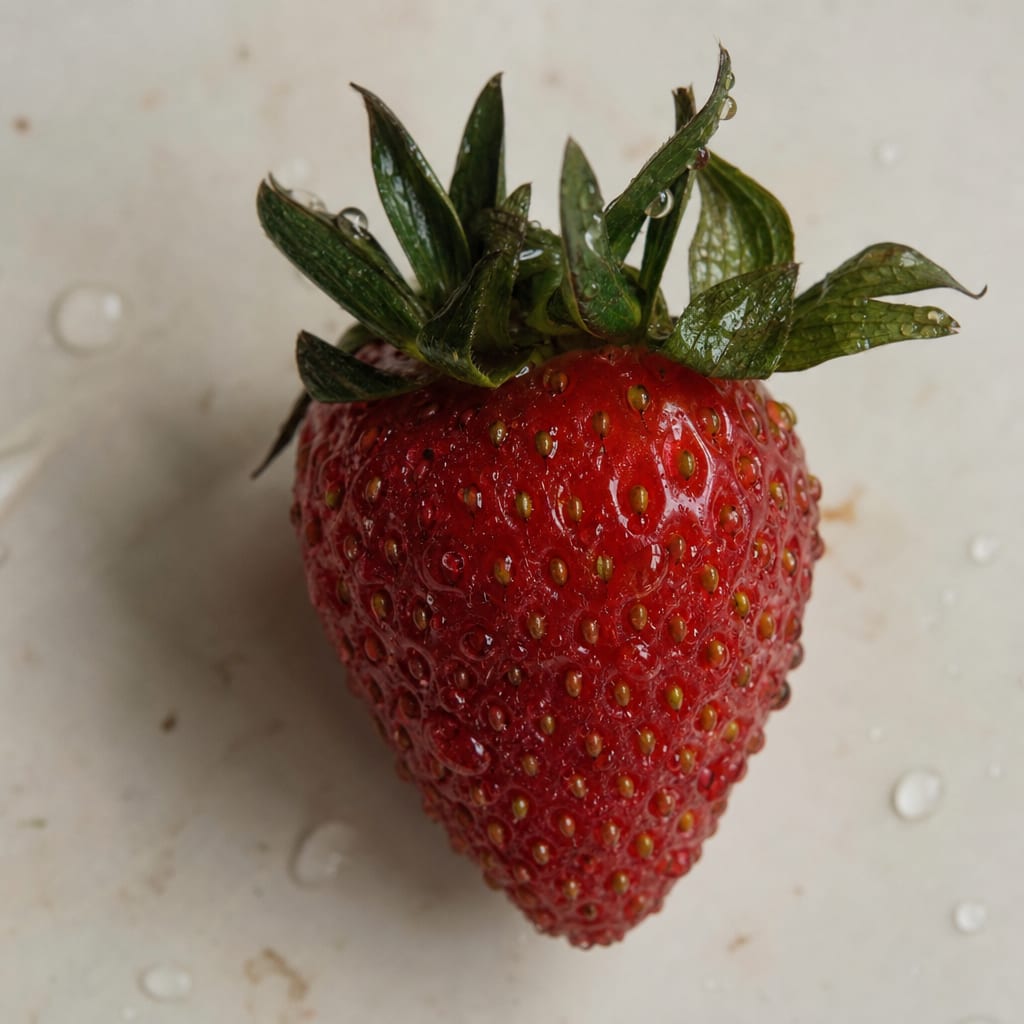
This is the one I almost left out because it sounds like a wellness-influencer reach. It isn't.
In March 2026, the Environmental Working Group published their annual Shopper's Guide to Pesticides in Produce. 35% of conventionally grown fruits and vegetables tested positive for PFAS pesticides, the same class of "forever chemicals" the federal government has spent years trying to remove from drinking water. Strawberries carried up to 10 different PFAS residues per sample. Spinach and kale, the leafy crops that absorb the most through their leaves, held the highest residue levels of any category.
Indoor hydroponic growing skips all of it. No spray. No drift. No regulatory grey zone. The water that touches the roots is the only thing touching the plant, and you're the one who put it there.
I worked in pharmaceutical advertising for six years before I had kids. I know dose makes the poison. I also have two children and I'd rather not be running a longitudinal study on them with a salad bowl.
The cleanest produce in your kitchen is the produce nobody ever sprayed.
90-day money-back guarantee · Free US shipping · No subscription
6.The Farmstand math, finally, after 90 days

I have the original 18-plant Farmstand. It cost $574. There's a 90-day money-back guarantee, which is the only reason I felt safe pressing buy.
In the last three months I've harvested butter lettuce, romaine, four kinds of basil, cilantro that didn't bolt for eight weeks, strawberries that didn't fly anywhere, kale, swiss chard, and enough arugula to feed a small farm-to-table restaurant. The system is self-watering. It's self-fertilizing. The seedlings arrive pre-sprouted from Lettuce Grow's nursery, so the part where I usually kill plants, the seedling stage, is already done for me.
My grocery bill is down about $80 a month. My compost bin is half as full. I haven't bought bagged spinach since week three.
I'm not going to tell you the Farmstand pays for itself in produce savings alone. The math says it gets close. What it actually buys you is a small system that puts living food in your kitchen and stops you being on the receiving end of a 1,500-mile supply chain you didn't choose.
Ninety days in, that was worth the cost of admission. The 91st day was when the guarantee window quietly closed and I noticed I wasn't even thinking about returning it.
90-day money-back guarantee · Free US shipping · No subscription
What you're actually buying
Grocery produce
Days to months old
- Days to weeks from harvest. Apples up to 12 months
- Up to 90% vitamin C lost in leafy greens
- 1,500 miles, on average, from farm to plate
- 35% of conventional samples test positive for PFAS
- ~$1,500/year thrown out per family of four
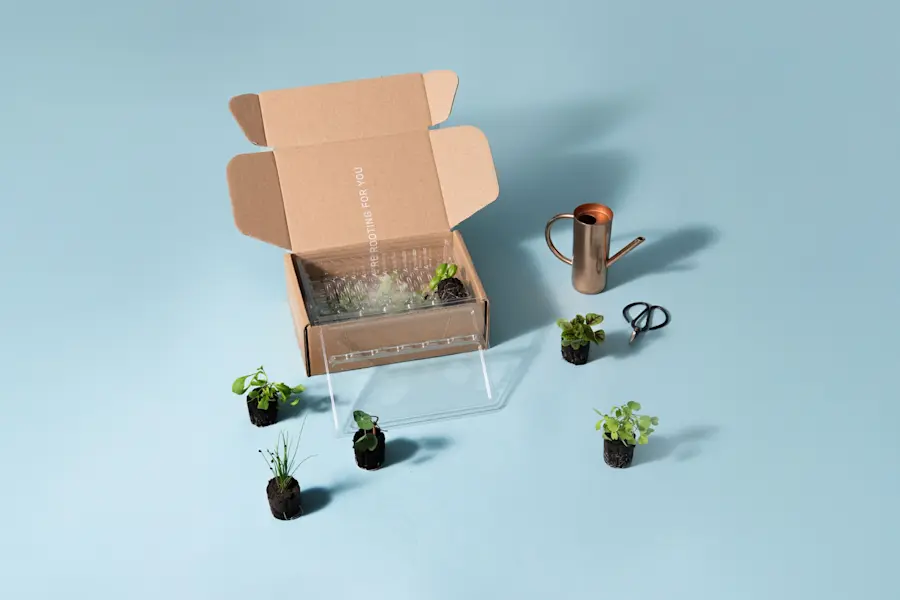
Farmstand at home
Minutes from harvest
- Minutes from harvest to plate. Every meal
- Nutrient retention close to peak. You eat it the day you pick it
- Four feet to your cutting board
- Zero pesticide spray. No drift. No grey zone
- Waste cut by 60-80% in our 90-day window
What real Farmstand growers are saying
Ha Ha Ha I'm a Gardener!
I hate gardening, but I love having fresh, safe food. My indoor garden named Lettie is perfect for me.
Live the Lettuce Grow Brand
Lettuce Grow makes it easy for new hydroponic gardeners. They give very detailed step-by-step directions and offer a catalog of YouTube videos to walk you through each step of the process. I'm very pleased.
Freshness at your fingertips
We have the farm stand and enjoy having the fresh vegetables throughout the summer and mid-autumn. I know the nutrients that are going into our vegetables.
Four years and still loving it
I am so pleased with my Lettuce Grow! I have used it now for 4 years and my fresh salad and vegetables are always a hit. Your service is excellent!
After 90 days, the right question stops being "is this saving me money?"
It starts being "what is it like to eat food that's actually alive?"
The popular advice on this category is shaped like a list of supermarket tricks. Buy organic. Shop the perimeter. Wash everything twice. None of that closes the gap between when a leaf is cut and when it lands on your plate. Only growing your own does.
If you've ever stood in your kitchen wondering why $200 of produce dies before you eat it, this is the system I'd actually recommend.
Common questions
How much does the Farmstand actually cost?
The 18-plant Original Farmstand starts at $574. Larger sizes (24, 30, 36 plants) scale up from there. There's an optional Glow Ring add-on for low-light kitchens. Lettuce Grow runs a 90-day money-back guarantee on the system itself. If you don't love it, you return it.
How long does it take to actually grow something edible?
The seedlings arrive pre-sprouted (3 weeks old), so most leafy greens are ready to harvest within 3 to 4 weeks of planting. Herbs and lettuces give you the fastest payback. Tomatoes and peppers take longer.
I have killed every plant I've ever owned. Is this really different?
Genuinely yes, because the failure modes are different. The system handles watering, light scheduling, and nutrient delivery. The part where most home gardeners fail, seed germination, is done by Lettuce Grow's nursery before the seedlings ship. Your job is to put them in the tower and refill the water tank.
Is hydroponic produce as nutritious as soil-grown?
Hydroponic and soil-grown produce have comparable nutrient profiles when both are eaten fresh. The bigger nutritional gap isn't soil-vs-water, it's time. A hydroponic tomato harvested today has more vitamin C than an organic one harvested last week.
Do I need to be home to take care of it?
The water tank holds 4 to 6 weeks of supply depending on the size and the season. Weekend trips are fine. Two-week vacations usually need a top-up. The 1:1 plant guide hotline is included if you have questions.
What happens if a seedling dies?
Lettuce Grow replaces failed seedlings. They publish a 100% success guarantee on the seedlings themselves.
The full system
Try the Farmstand for 90 days. Send it back if it isn't doing what I just described.
Lettuce Grow's 18-plant Original Farmstand starts at $574. Self-watering. Self-fertilizing. Pre-sprouted seedlings ship from Lettuce Grow's nursery. 1:1 plant guide support included. Backed by a 90-day money-back guarantee.
If it doesn't do what I described in the last 1,500 words, send it back. That's the entire offer.
Try the Farmstand risk-free →90-day money-back guarantee · Free US shipping · FDA food-grade materials